
Kitchen flooring · Scotland
Kitchen flooring in Argyll and Bute
Kitchen flooring in Argyll and Bute starts with a free visit to measure up, then a written scope and quote before any work begins.
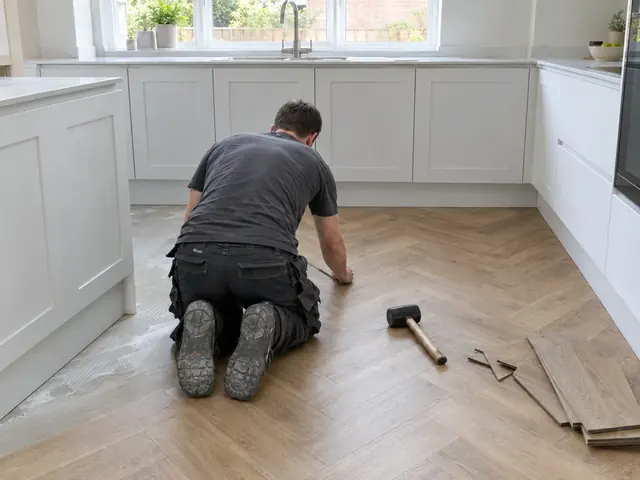
When does kitchen flooring make sense in Argyll and Bute?
If your Argyll and Bute kitchen has curling vinyl, cracked tiles or boards that have swollen near the sink, a new floor can be laid without changing the units.
Families across Argyll and Bute often choose LVT for a kitchen because it is warmer and quieter underfoot than tiles and copes well with spills and dropped cups.
What does kitchen flooring in Argyll and Bute include?
Here is what usually goes into kitchen flooring, adjusted to your Argyll and Bute kitchen after we have measured it:
- Free survey visit to check the subfloor, measure up and give an itemised quote
- Old coverings lifted and removed, with pre-2000 floor tiles checked for asbestos first
- Moisture checks on concrete floors and screeds before any floor finish is laid
- Levelling compound or a plywood overlay to give a flat, firm base
- LVT, sheet vinyl, porcelain or ceramic tiles, or engineered wood laid to suit the room
- Flooring run under appliance spaces so machines can be pulled out for servicing
- Underlay suited to the floor finish, the subfloor and any underfloor heating
- Threshold trims at doorways, with skirting, plinths and kickboards refitted
How much does kitchen flooring cost in Argyll and Bute?
Use these ranges to plan your budget. They include VAT, reflect costs in Scotland, and are firmed up once we have seen your Argyll and Bute kitchen. Prices in Scotland usually come in below the national guide, as labour rates are lower than in the South East.
| Typical project | Guide price |
|---|---|
| LVT or vinyl, kitchen floorPreparation, underlay where needed and trims | £470–£1,400 |
| Porcelain or ceramic tiles, kitchen floorPreparation, adhesive, grout and trims | £850–£1,900 |
| Floor levelling or new plywood baseSo the floor finish and units sit flat | £280–£850 |
Guide prices are for a typical-sized kitchen floor, including preparation, adhesive or underlay and trims; the material you choose, open-plan floor areas and any levelling or plywood base are confirmed at the survey. Prices include VAT at 20%.
Kitchens in homes across Argyll and Bute
The housing mix across Argyll and Bute includes Victorian villas, whitewashed cottages, tenement flats and post-war bungalows, so no two kitchen fits are quite alike. Victorian villas in Dunoon and Oban often have a separate scullery and a larger kitchen, while cottages and bungalows tend to have a compact room at the back.
Soft water is usual across Argyll and Bute, so limescale is rarely a concern, though rural homes on private supplies may need their own filtering. Long single-track roads are common, and some mainland addresses are quickest reached by ferry, so delivery dates, vehicle size and worktop lengths need planning around timetables and weather.
Villa kitchens are sometimes split between a main room and a former scullery, and joining them is a common project that needs a building warrant if the wall is load-bearing. Rural cottages are often off the gas grid, so cooking may be electric or run from LPG.
Rules for kitchen flooring in Argyll and Bute
In Scotland, replacing a kitchen floor finish does not need a building warrant or planning permission. If you own a flat, check your title deeds and any deed of conditions, which may set rules on floor coverings or sound insulation; tenants should check their tenancy agreement. Electric underfloor heating must meet the building standards and BS 7671, so ask the electrician for a certificate. Listed buildings may need consent before original floors are removed.
Parts of Cowal lie within Loch Lomond and The Trossachs National Park, and listed buildings or conservation areas may need consent for a new external vent.
Before you start
- Decide early whether the floor runs under the units or stops at the plinths; it affects ordering quantities, plinth heights and how the kitchen is fitted.
- New screeds hold a lot of water and must be dry enough before most floors go down, so allow time and ask for a moisture reading.
- Check the finished floor height at doorways, especially with tiles over a plywood overlay, so doors still swing and thresholds do not create a trip.
- Floating floors such as click LVT or engineered boards should not be trapped under heavy fixed units or an island; follow the flooring maker's instructions.
- Measure the gap under internal doors in your Argyll and Bute home before choosing flooring; thicker tiles or an overlay may mean doors need trimming.
- If your Argyll and Bute house was built before 2000 and still has old vinyl or thermoplastic tiles, have them tested for asbestos before anyone lifts or sands them.
Questions about kitchen flooring in Argyll and Bute
How much does kitchen flooring cost in Argyll and Bute?
For an LVT or vinyl kitchen floor, budget around £470 to £1,400 including VAT in Argyll and Bute. That reflects typical costs in Scotland; we confirm the actual figure in writing once we have measured up.
Do you cover the whole of Argyll and Bute?
Yes, across mainland Argyll and Bute, including Dunoon and Oban. We do not currently cover the islands, such as Bute, Mull and Islay. Every job starts with a free survey visit and an itemised written quote.
Should kitchen flooring go down before or after the units?
It depends on the floor. Tiles are often laid first, or at least run under the appliance spaces, so a dishwasher or fridge can be pulled out without catching on the edge. Floating floors such as click LVT or engineered boards usually go down after the units, up to the plinth line, so they are not trapped under heavy fixed cabinets. We follow the flooring maker's instructions.
How long does it take to lay a kitchen floor?
Most kitchen floors take one to two days to lay once the base is ready. Add curing time if a levelling compound is used, which depends on the product and its thickness, and allow much longer for a new screed, which must be dry enough before most floors go down. Tiled floors also need the adhesive and grout to set before heavy use.
Is engineered wood a good choice for a kitchen floor?
It can be, but it needs more care than LVT or tiles. Engineered wood can swell or stain if water sits on it, so it is less suited to the areas around a sink or dishwasher, where leaks are most likely. If you choose it, pick a board the maker approves for kitchens, wipe spills promptly and keep the finish maintained.
Kitchen flooring in towns across Argyll and Bute
Choose a town for local guide prices and postcode coverage: