
Kitchen electrics · Scotland
Kitchen electrics in Dunbartonshire
Kitchen electrics in Dunbartonshire start with a free visit to measure up, then a written scope and quote before any work begins.
What prompts kitchen electrics in Dunbartonshire?
Buyers of older houses across Dunbartonshire sometimes find a consumer unit with no RCD protection or spare space, and want it dealt with before a new kitchen goes in.
Kitchens bought online often come with integrated appliances that need their own supplies and switches, so it pays to plan those for your Dunbartonshire kitchen before the units arrive.
What do kitchen electrics in Dunbartonshire include?
Here is what usually goes into kitchen electrics, adjusted to your Dunbartonshire kitchen after we have measured it:
- A check of the consumer unit, existing circuits and earthing before the layout is fixed
- Socket positions planned around worktop appliances, the kettle spot and any breakfast bar
- First-fix cables and back boxes run before plastering or boarding
- A dedicated circuit for an oven, range cooker or induction hob where needed
- Accessible isolation switches for integrated appliances, reachable without pulling units out
- Supplies for the cooker hood, under-cabinet lights and a boiling water tap
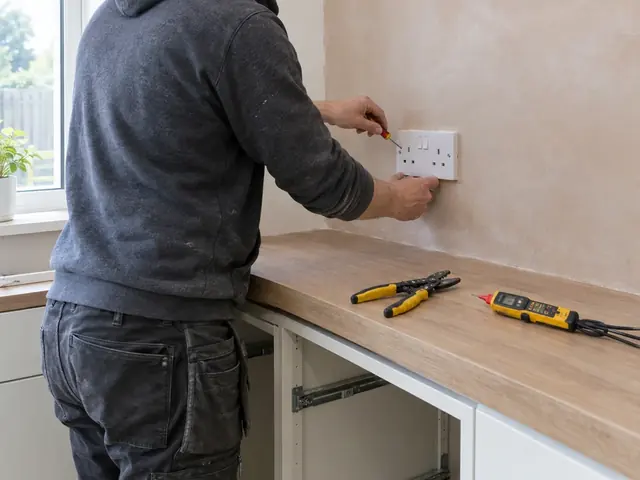
- Second fix of sockets, switches and appliance connections once tiling is done
- Testing, the correct certificate, and notification of the work where it is required
How much do kitchen electrics cost in Dunbartonshire?
Typical kitchen electrics prices for homes in Dunbartonshire, including VAT and adjusted for Scotland. Your own figure depends on the size of the kitchen, the layout and what is moving. Prices in Scotland usually come in below the national guide, as labour rates are lower than in the South East.
| Typical project | Guide price |
|---|---|
| Extra sockets or spurs on existing circuitsNew positions to suit the layout | £240–£470 |
| Kitchen electrics for a full refitCircuits, sockets, appliance points and under-cabinet lighting | £470–£1,400 |
| New cooker or induction circuitDedicated circuit from the consumer unit, tested and certified | £280–£660 |
Guide ranges cover the electrician's labour, cable, back boxes and standard white accessories with testing and certification; a consumer unit upgrade, decorative faceplates and plaster repairs are quoted separately if needed. Prices include VAT at 20%.
Kitchens in homes across Dunbartonshire
The housing mix across Dunbartonshire includes sandstone tenement flats, Victorian villas, interwar bungalows and four-in-a-block flats, so no two kitchen fits are quite alike. Villas and bungalows in Bearsden and Bishopbriggs often have separate kitchens with room to open up, while tenements and four-in-a-block flats in Clydebank tend to have small galleys.
Dunbartonshire's water is soft, so limescale is rarely a problem and taps and boiling water taps tend to stay clean. Tenement closes and common stairs mean carrying units by hand, while villa driveways usually make deliveries simpler.
Opening an interwar bungalow kitchen into the dining room is a common way to make a family space, subject to a building warrant if the wall is load-bearing. Tenement flats often have compact kitchens where careful storage planning and slimline appliances help.
Rules for kitchen electrics in Dunbartonshire
In Scotland, electrical work in a house does not normally need a building warrant, but it must meet building standards 4.5 and 4.6 and be designed, installed and tested to BS 7671. The notification arrangements used in England and Wales do not apply here. Ask for an Electrical Installation Certificate for a new circuit, or a Minor Electrical Installation Works Certificate for additions to an existing one, and keep it with your property papers. Every home in Scotland must have an interlinked heat alarm in the kitchen, so it is kept or refitted, and tested, as part of the job.
The northern edge of the area borders Loch Lomond and The Trossachs National Park, and listed buildings or conservation areas may need consent before a new extractor vent is added.
Before you start
- Check whether your consumer unit has spare ways and RCD protection; an older board may need upgrading before new circuits can be added.
- Ask for isolation switches for the dishwasher, fridge and washing machine to be reachable without moving an appliance or a unit.
- Keep sockets and switches sensibly clear of the sink and hob, away from splashing water and heat, and agree the positions on the plan.
- Count the appliances that will live on the worktop, then add a couple of spare sockets; extension leads across a worktop are a poor substitute.
- If you live in a flat in Dunbartonshire, find out where your consumer unit and meter are, as some sit in communal cupboards that need the managing agent's access.
- Ask for USB sockets or extra doubles near the breakfast bar at first fix; changing a faceplate later is easy, adding a new box is not.
Questions about kitchen electrics in Dunbartonshire
How much do kitchen electrics cost in Dunbartonshire?
For extra sockets or spurs on existing circuits, budget around £240 to £470 including VAT in Dunbartonshire. That reflects typical costs in Scotland; we confirm the actual figure in writing once we have measured up.
Do you cover the whole of Dunbartonshire?
Yes. We carry out kitchen electrics across Dunbartonshire, including Bearsden, Clydebank, Vale of Leven and Bishopbriggs. Every job starts with a free survey visit and an itemised written quote.
Do I need an electrician to add sockets in a kitchen?
Yes, any kitchen wiring is a job for a qualified electrician. In England, adding sockets to an existing circuit is not notifiable, but it must meet BS 7671 and should be recorded on a Minor Works Certificate. In Wales the same job is notifiable because it extends a circuit in a kitchen. Scotland and Northern Ireland have no notification step, but the same wiring standard applies.
What is first fix and second fix in kitchen electrics?
First fix is the hidden part: running cables and fixing back boxes into walls and ceilings after the old kitchen is out and before plastering. Second fix comes after the units, worktops and tiling are in, when sockets, switches and appliance connections are fitted and the whole installation is tested. Getting positions right at first fix matters, because moving a box after tiling means cutting tiles.
Does an induction hob need its own circuit?
Usually, yes. Most induction hobs draw too much power to run from a plug socket, so they are wired to a dedicated cooker circuit from the consumer unit. One circuit can sometimes feed both a hob and an oven if the cable and protection are sized for them. The electrician checks the hob rating against the existing circuit at the survey and tells you whether a new one is needed.
Kitchen electrics in towns across Dunbartonshire
Choose a town for local guide prices and postcode coverage:
- Kitchen electrics in Bearsden
- Kitchen electrics in Clydebank
- Kitchen electrics in Vale of Leven
- Kitchen electrics in Bishopbriggs
- Kitchen electrics in Dumbarton
- Kitchen electrics in Kirkintilloch