
Kitchen strip-out and removal · England
Kitchen strip-out and removal in Wiltshire
If you need kitchen strip-out and removal anywhere in Wiltshire, we survey the kitchen, agree the scope with you and book every trade through to handover.
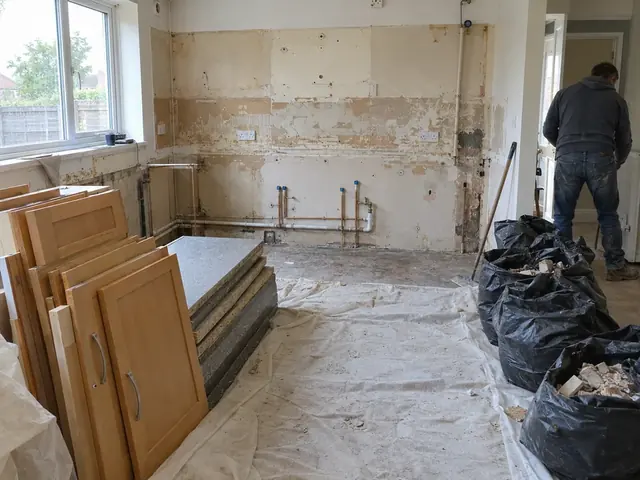
What prompts kitchen strip-out and removal in Wiltshire?
If a leak has ruined the base units in your Wiltshire kitchen, a careful strip-out lets the floor and walls dry out and be checked before anything new goes in.
Some Wiltshire households are fitting a new kitchen themselves and want the heavy, messy part done by others, with gas capped and circuits made safe before they begin.
What does kitchen strip-out and removal in Wiltshire include?
After the survey visit we write the scope down. For kitchen strip-out and removal in Wiltshire it usually covers:
- Survey of gas, electrical and water positions and the route out of the house
- Floors, doorways, stairs and the route to the skip or van protected
- Gas supply disconnected and capped by a Gas Safe registered engineer
- Kitchen circuits isolated and made safe by an electrician
- Water isolated and supplies capped so the rest of the house keeps running water
- Wall units, base units, worktops, sink and appliances removed in order
- Old tiles stripped and walls prepared for plaster, where that is agreed
- Waste taken through licensed routes and old appliances sent for recycling
How much does kitchen strip-out and removal cost in Wiltshire?
Typical kitchen strip-out and removal prices for homes in Wiltshire, including VAT and adjusted for the South West. Your own figure depends on the size of the kitchen, the layout and what is moving. Prices across the South West are broadly in line with UK averages.
| Typical project | Guide price |
|---|---|
| Old kitchen removed and disposed ofUnits, worktops and appliances, including skip hire | £210–£520 |
| Removal with services made safeGas capped by a Gas Safe engineer, circuits made safe by an electrician | £310–£720 |
| Strip-out back to bare wallsOld tiles removed and walls prepared for plaster | £520–£1,200 |
Guide ranges include labour, protection, waste removal or skip hire and, where listed, making services safe; asbestos testing or removal and replastering are priced separately. Prices include VAT at 20%.
Kitchens in homes across Wiltshire
Across Wiltshire you will often find thatched and stone cottages, Victorian railway terraces, post-war estate houses and new-build estates, and each shapes the kitchen differently. Railway terraces in Swindon often have a narrow back kitchen, while stone and thatched cottages in the villages tend to have small kitchens with low ceilings.
Wiltshire's water is hard, much of it from chalk, so limescale on taps and boiling water taps is common and a filter can help. Village lanes and farm tracks can be narrow for delivery lorries, and Salisbury's historic centre has limited parking, so delivery is planned in advance.
Railway terraces often have a narrow galley that owners open into the dining room to make a family kitchen. In a thatched or stone cottage, uneven walls and floors usually mean careful scribing, and cooker extraction needs extra thought where a vent cannot easily go through a thick or listed wall.
Rules for kitchen strip-out and removal in Wiltshire
Removing a kitchen needs no planning permission in England, but a listed home may need listed building consent before historic fittings are taken out. Only a Gas Safe registered engineer may disconnect and cap a gas supply, and circuits should be made safe by an electrician to BS 7671. A skip on the road usually needs a council permit, which the skip firm normally arranges, and waste should go with a carrier registered with the Environment Agency.
Listed thatched cottages, Salisbury's historic centre and other conservation areas may need consent for a new external vent or changes to historic features.
Before you start
- Old steel sinks sometimes have bitumen sound-deadening pads underneath, which may contain asbestos and should be tested before the sink is broken up.
- Check where a skip can go; one on the road usually needs a council permit, which the skip firm normally arranges.
- Line up the new kitchen soon after the strip-out, as the room stays without a cooker or sink until the services are reconnected.
- Leaseholders should check the lease and building rules on working hours, lift use and waste storage before booking a strip-out.
- Set up a kettle and microwave in another room of your home in Wiltshire, as the kitchen will have no power once the circuits are made safe.
- Measure the hallway and doors on the route out; long worktops and tall larder units sometimes need cutting down to leave the house without damaging walls.
Questions about kitchen strip-out and removal in Wiltshire
How much does kitchen strip-out and removal cost in Wiltshire?
Guide prices in Wiltshire are about £210 to £520 including VAT for removing and disposing of an old kitchen. The final price depends on the size of the kitchen and what is moving, and is set out in an itemised written quote.
Do you cover the whole of Wiltshire?
Yes. We carry out kitchen strip-out and removal across Wiltshire, including Swindon, Salisbury, Trowbridge and Chippenham. Every job starts with a free survey visit and an itemised written quote.
Where does the old kitchen go after it is removed?
Into licensed waste routes. Units, worktops and packaging go by skip or van with a registered waste carrier to permitted sites, and old appliances go for recycling, which matters most for fridges and freezers because their gases need specialist treatment. Anything you want to keep or sell, such as a working oven, is set aside before the strip-out starts.
What happens if asbestos is found during a kitchen strip-out?
Work in that area stops. Homes built before 2000 may contain asbestos in textured ceiling coatings, old floor tiles, some boiler cupboard boards and the bitumen pads under old steel sinks. Suspect material is sampled and tested by a specialist, and if it does contain asbestos it is removed by a specialist contractor under the asbestos regulations before the strip-out carries on.
Who disconnects the gas and electrics before a strip-out?
A Gas Safe registered engineer disconnects and caps the gas supply to the hob or cooker, which is a legal requirement everywhere in the UK. An electrician isolates the kitchen circuits and makes the cable ends safe to BS 7671, and the water is turned off and the supplies capped. Only then do the units and appliances come out.
Kitchen strip-out and removal in towns across Wiltshire
Choose a town for local guide prices and postcode coverage:
- Kitchen strip-out and removal in Swindon
- Kitchen strip-out and removal in Salisbury
- Kitchen strip-out and removal in Trowbridge
- Kitchen strip-out and removal in Chippenham
- Kitchen strip-out and removal in Melksham
- Kitchen strip-out and removal in Warminster
- Kitchen strip-out and removal in Devizes
- Kitchen strip-out and removal in Marlborough
- Kitchen strip-out and removal in Malmesbury