
Kitchen plastering and decorating · England
Kitchen plastering and decorating in Lancashire
Homeowners and landlords across Lancashire can book us for kitchen plastering and decorating: walls and ceilings skimmed or re-boarded after strip-out, then decorated in wipeable kitchen paint.
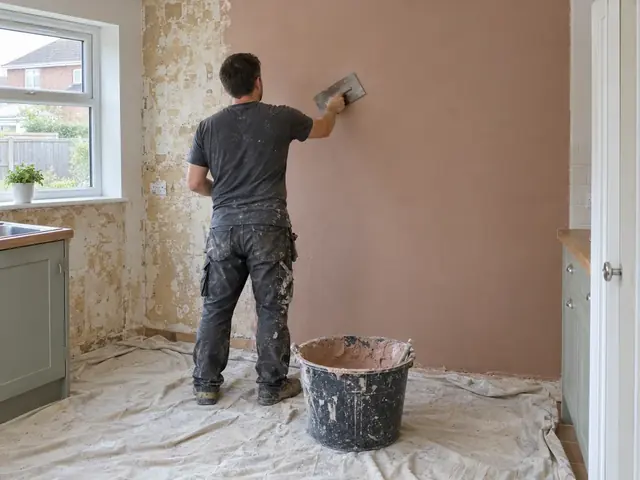
Why do people in Lancashire choose kitchen plastering and decorating?
Once the old kitchen is out in a Lancashire home, the walls behind it are often patched, chased and uneven, and a skim gives the new units a sound surface.
Homeowners in Lancashire with textured ceilings in older kitchens often want them smoothed, and the first step is an asbestos test if the house dates from before 2000.
What does kitchen plastering and decorating in Lancashire include?
Every kitchen is different, so we confirm the scope in writing. Most jobs of this kind include:
- Free survey visit to check walls and ceilings and give an itemised quote
- Loose or blown plaster hacked off back to the wall where needed
- Walls re-boarded or skimmed so units and tiles fix to a flat surface
- Chases around new sockets, cable runs and pipework filled and made good
- Ceilings skimmed or overboarded, after textured coatings in older homes are tested for asbestos
- Diluted mist coat on new plaster, then moisture-resistant, wipeable kitchen paint
- Ceilings, walls, skirting, architraves and door frames decorated to finish the room
- Edges around units, worktops and splashbacks cut in neatly at the end
How much does kitchen plastering and decorating cost in Lancashire?
As a starting point for Lancashire, these ranges include VAT at 20% and allow for typical labour costs in the North West. Costs across the North West tend to sit under UK averages, which these ranges reflect.
| Typical project | Guide price |
|---|---|
| Skim kitchen walls and ceiling over sound plasterPrepared and skimmed | £330–£760 |
| Hack off, re-board and skim a kitchenOld plaster removed back to the wall | £860–£1,700 |
| Kitchen decoratedWalls, ceiling and woodwork | £380–£1,100 |
Guide prices are for a typical kitchen, with labour and standard materials for plastering or decorating; asbestos testing, structural repairs, damp treatment and lime plaster are not included and are quoted separately if needed. Prices include VAT at 20%.
Kitchens in homes across Lancashire
The housing mix across Lancashire includes stone-built mill-town terraces, red-brick Victorian terraces, 1930s semis and seaside bungalows, so no two kitchen fits are quite alike. Mill-town terraces often have a small back kitchen opening onto a yard, while seaside bungalows and 1930s semis tend to have a square kitchen at the rear.
Most of Lancashire has soft mains water, so heavy limescale is rare and taps, sinks and appliances stay cleaner for longer. Back alleys and yards can help with deliveries, though narrow yard gates and steep hill streets may limit how long worktops come in.
Opening the back kitchen into the middle room is a common way to gain space in a mill-town terrace. Bungalows on the Fylde coast are often refitted for easier living, with better lighting, more drawers and appliances at a comfortable height.
Rules for kitchen plastering and decorating in Lancashire
Skimming, re-boarding and decorating a kitchen in England need no planning permission or building regulations approval in most cases. In a listed building, listed building consent may be needed before original plaster is removed, and older solid walls may be better suited to breathable lime plaster than gypsum. Hacking an outside wall back to brick and re-boarding it may count as renovating a thermal element under Part L, so check with building control first.
Where an older town-centre home is listed or in a conservation area, a new vent on a front wall may need consent, and flats in converted houses usually need freeholder approval.
Before you start
- Whether a wall can be skimmed or needs hacking off is often clear only once the old tiles and units are off, so allow some contingency.
- Fresh plaster usually needs three to six weeks to dry fully, so plan for a mist coat first and the final colour once it has dried.
- Older homes with solid walls may have lime plaster, which is often better repaired with lime than gypsum, particularly where the building is listed.
- If your home was built before 2000, have textured ceiling coatings tested for asbestos before anyone sands, scrapes or drills into them.
- Before final decorating in your Lancashire kitchen, check that the new worktops and floor are covered, as paint splashes are much easier to prevent than to remove.
- Ventilate your Lancashire kitchen gently while new plaster dries, but avoid blasting heaters at it, as forcing it dry can cause cracking.
Questions about kitchen plastering and decorating in Lancashire
How much does kitchen plastering and decorating cost in Lancashire?
Kitchen plastering and decorating in Lancashire typically costs £330 to £760 including VAT for skimming the walls and ceiling over sound plaster, based on prices in the North West. Larger or more involved jobs cost more, and your price is fixed in writing after a free survey visit.
Do you cover the whole of Lancashire?
Yes. We carry out kitchen plastering and decorating across Lancashire, including Preston, Burnley, Blackburn and Blackpool. Every job starts with a free survey visit and an itemised written quote.
Do I need to replaster after removing kitchen tiles?
Usually, at least in places. Taking tiles off often pulls away the plaster skin or leaves adhesive ridges, so the wall may need skimming, patching or, where the plaster has come loose, hacking off and re-boarding. If you are retiling the same area, a flat, sound surface may be enough without a full skim. We check this once the tiles are off.
How long should new plaster dry before painting?
Fresh plaster usually needs three to six weeks to dry fully before full decorating, depending on its thickness, the time of year and how well the room is ventilated. It turns from dark to an even, pale colour as it dries. A diluted mist coat can usually go on sooner to seal the surface, with the final coats applied once drying has finished.
Should a kitchen be plastered before or after the units are fitted?
Before. Plastering is done after strip-out and first-fix electrics and plumbing, so new cables and pipes are chased in and covered, and before the base and wall units go in. Units then fix to a flat, finished surface, and the decorator only needs to cut in around them at the end. Patch repairs after fitting are possible but harder to hide.
Kitchen plastering and decorating in towns across Lancashire
Choose a town for local guide prices and postcode coverage:
- Kitchen plastering and decorating in Preston
- Kitchen plastering and decorating in Burnley
- Kitchen plastering and decorating in Blackburn
- Kitchen plastering and decorating in Blackpool
- Kitchen plastering and decorating in Morecambe
- Kitchen plastering and decorating in Lancaster
- Kitchen plastering and decorating in Lytham St Annes
- Kitchen plastering and decorating in Skelmersdale
- Kitchen plastering and decorating in Leyland
- Kitchen plastering and decorating in Accrington
- Kitchen plastering and decorating in Chorley
- Kitchen plastering and decorating in Darwen
- Kitchen plastering and decorating in Thornton-Cleveleys
- Kitchen plastering and decorating in Nelson
- Kitchen plastering and decorating in Fleetwood
- Kitchen plastering and decorating in Ormskirk
- Kitchen plastering and decorating in Rawtenstall
- Kitchen plastering and decorating in Colne
- Kitchen plastering and decorating in Poulton-le-Fylde
- Kitchen plastering and decorating in Clitheroe
- Kitchen plastering and decorating in Garstang